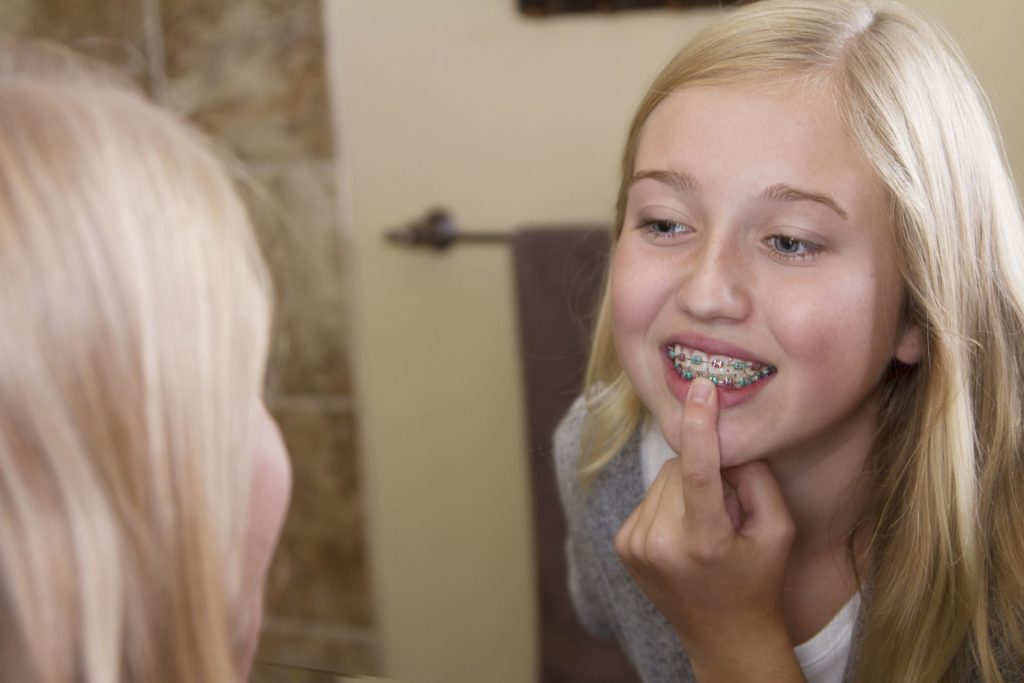
Children should first see an orthodontist by age 7, according to the American Association of Orthodontists (AAO). By this age, enough adult teeth have come in for an orthodontist to spot early signs of bite issues, crowding, or jaw growth concerns. Most kids won’t need treatment right away, but an early evaluation gives Dr. Schweiss and Dr. Jusseaume a chance to monitor your child’s growth and step in at the right moment.
At Smiles to Love Orthodontics, that first visit is about gathering information, not rushing into braces. We check how the teeth are erupting, how the jaws are developing, and whether any habits could affect long-term alignment.
Early detection can prevent bigger issues later. Spotting a crossbite, deep bite, or crowding while the jaw is still growing means treatment is often shorter, simpler, and easier on your child. If everything looks great, we’ll simply schedule check-ins to watch your child’s smile as it develops.

Why Is Age 7 the Recommended Age?
Age 7 works well because it lines up with a big change in your child’s mouth. By this point, the first adult molars usually have erupted, along with several front teeth. That mix of baby and permanent teeth gives an orthodontist a clear picture of how everything is fitting together.
With those first molars in place, Dr. Schweiss and Dr. Jusseaume can evaluate the back bite, front bite, and the overall relationship between the upper and lower jaws. This is something that simply can’t be seen accurately when only baby teeth are present.
The other reason age 7 matters? Growth. Your child’s jaw is still developing, which makes it much easier to guide bone and tooth position when needed. Waiting until every adult tooth is in can close that window, so an early look often gives specialists more room to work with.
At this age, an early evaluation helps us identify:
- Crowding that may need extra room created before more adult teeth come in
- Crossbites where the upper and lower teeth don’t line up correctly
- Underbites or overbites that respond best to early guidance
- Extra spacing that could point to missing or impacted teeth
- Protruding front teeth that raise the risk of injury during sports or play
The goal isn’t to start braces early, it’s to make sure nothing sneaks up on you and your family later.
What Happens During an Early Orthodontic Evaluation?
An initial consultation at Smiles to Love Orthodontics is unhurried, welcoming, and centered on your child’s comfort. There are no long forms or poking and prodding, just a careful look at how your child’s smile is developing.
During that first visit, you can expect:
- A visual exam of the teeth, gums, jaws, and bite alignment
- Digital X-rays or scans (when needed) to see teeth that haven’t erupted yet and to check jaw structure
- A conversation about habits such as thumb-sucking, mouth breathing, or tongue thrust that can shape the bite
- A review of growth patterns including how the upper and lower jaws are lining up
- A clear recommendation on next steps
After the exam, Dr. Schweiss or Dr. Jusseaume will walk you through what they found. Most of the time, one of three things happens: we schedule periodic check-ins to monitor growth, we recommend a short round of early treatment to address a specific concern, or we let you know your child looks great and doesn’t need anything right now.
You’ll leave with a clear plan and honest answers, not a hard sell. Everyone deserves a beautiful smile, and that starts with knowing where your child stands today.
What Are the Benefits of Early Orthodontic Evaluation?
Early evaluation is one of the simplest ways to protect your child’s long-term smile. Even if no treatment is needed yet, that first visit sets the stage for smart timing down the road.
How Does Early Evaluation Protect Growth and Development?
- Guides jaw growth to create space for permanent teeth to come in straight
- Reduces the risk of impacted teeth that get stuck under the gums and require more involved care later
- Lowers the chance of future extractions by making room while the jaw is still forming
- Corrects harmful oral habits like thumb-sucking or tongue thrust before they reshape the bite
What Long-Term Advantages Does It Offer?
- May shorten future treatment because groundwork has already been laid
- Protects protruding front teeth from injury during sports and everyday play
- Boosts confidence by addressing self-consciousness about a smile early
- Improves chewing and speech when bite issues have been affecting development
Think of an early visit as a check-up, not a commitment. It’s a low-pressure way to make sure your child’s smile is on track, and in many cases it helps families feel more prepared for whatever comes next.
Should You Choose Early Treatment or Wait for All Adult Teeth?
One of the most common questions we hear from parents is whether their child needs treatment now or should wait. The honest answer? It depends on what we see. Some kids benefit from a short round of early care, while others do great with monitoring until they’re a bit older.
Here’s how the two approaches compare:
Many children only need one phase of treatment, and plenty need none at all. The point of that early visit isn’t to start something, it’s to figure out the smartest timing for your child specifically.
What Affects the Investment for Early Orthodontic Care?
Early orthodontic care investment depends on a few key factors: whether treatment is needed now or later, the type of appliance used, how long care lasts, and your insurance coverage. Initial consultations at Smiles to Love Orthodontics are always free, so the first visit itself costs nothing at all. If treatment is recommended, these factors shape what you can expect:
- Whether treatment is needed now or later; monitoring visits are typically low investment or included
- Type of appliance used; Phase 1 appliances like expanders differ in price from full metal braces or clear braces
- Length of treatment and how many follow-up visits are needed
- Insurance benefits and how much orthodontic coverage your plan offers
- Flexible payments we set up to fit your family’s budget
We know finances shouldn’t get in the way of the smile of your dreams. That’s why we work with you and your family to create affordable flexible payments that make care doable. Insurance benefits are applied where available, and we’re happy to walk through every option during your free consult so you always know what to expect before moving forward.
What Signs Mean Your Child Should See an Orthodontist?
You don’t have to wait for age 7 if you notice something that seems off. Sometimes parents spot early clues that suggest a visit sooner rather than later. Trust your gut, a quick check-in with Smiles to Love Orthodontics is always worth it.
Watch for these signs that it’s time to schedule a visit:
- Early or late loss of baby teeth, losing them before age 5 or holding onto them past age 7
- Crowded, blocked, or crooked teeth as adult teeth come in
- Difficulty chewing or biting food comfortably
- Mouth breathing during the day or while sleeping
- Ongoing thumb-sucking past age 5
- Speech issues like a lisp that could be linked to tooth or jaw position
- Jaws that shift, click, or pop when opening and closing
- Teeth that don’t meet properly when the mouth is closed, or don’t meet at all
- Biting the cheek or roof of the mouth frequently
- Facial imbalance or a jaw that looks off-center
If any of these sound familiar, an early evaluation can bring clarity fast. Even if no treatment is needed, you’ll walk away knowing your child’s smile is being watched by specialists.
Frequently Asked Questions
At what age should my child first visit an orthodontist?
The American Association of Orthodontists recommends that children first see an orthodontist by age 7. At this age, a mix of baby and adult teeth gives specialists a clear view of how the bite and jaws are developing. Most children won’t need treatment yet, but the visit helps identify the best timing for any care down the road.
Does an early orthodontic visit mean my child will get braces right away?
No. An early visit is about gathering information, not starting braces. In many cases, we simply schedule periodic check-ins to monitor growth. Braces or clear aligners are only recommended when there’s a clear reason, and often that’s years later.
Is the first visit really free?
Yes. Initial consultations at Smiles to Love Orthodontics are always free, so the first visit itself costs nothing. If treatment is recommended, we’ll walk you and your family through flexible payments and insurance benefits so you understand the investment before making any decisions.
What happens if my child’s smile looks fine at age 7?
That’s a great outcome, and it happens often. If everything looks healthy, we’ll schedule occasional check-ins to keep an eye on growth as more adult teeth come in. You’ll leave with peace of mind knowing your child’s smile is being watched by specialists.
Can early treatment shorten future orthodontic care?
In many cases, yes. Early treatment can guide jaw growth and create space for permanent teeth, which sometimes reduces the length or complexity of care later on. Every child is different, so Dr. Schweiss and Dr. Jusseaume will recommend the approach that fits your child’s specific needs.
Our team welcomes families across the Dublin area and central Ohio, kids, teens, and adults alike, and we love making that first visit fun, easy, and pressure-free. If your child is around age 7, or you’ve noticed one of the signs above, it may be a good time to schedule a free consult and enjoy your orthodontic journey with confidence.
Schedule your free consult today and let’s help your child smile big, shine bright.