What Are Retainers and Why You Need Them After Braces
Whether you end up with a permanent or removable retainer, how you care for it and when you replace it all come down to one goal, which is keeping your new smile exactly where it belongs. A retainer is a custom orthodontic appliance worn after active treatment to hold your teeth in their corrected positions while the surrounding bone and gum tissue stabilize.
Here’s why this phase matters so much. After braces or Invisalign, your bone and ligaments typically need around 9 to 12 months to firm up around the new tooth positions. Without a retainer during that time, your teeth naturally want to drift back toward where they started. Orthodontists call this orthodontic relapse, and it’s the single biggest reason beautiful smiles fade.
You’ll generally choose between two main categories: permanent (also called bonded or fixed) retainers and removable retainers. Both work well when worn as directed. The choice between them often comes down to personal preference, lifestyle and the recommendation of your orthodontist based on how your teeth were corrected.
At Smiles to Love, retainers are the final phase of every braces or Invisalign treatment. We’ll help you and your family pick the option that protects your smile for the long haul and keeps those hard-earned corrections locked in place.
Types of Retainers: How Permanent and Removable Options Work
You have more retainer choices today than ever before. Each type keeps teeth in place in a slightly different way, and the right fit depends on your smile goals and daily habits.
What Is a Permanent (Bonded) Retainer?
A permanent retainer is a thin, custom-shaped wire that sits behind your front teeth and is bonded in place with dental cement. It stays put 24 hours a day, seven days a week. You don’t take it out, you don’t lose it and nobody can see it when you smile.
How Does a Hawley Retainer Work?
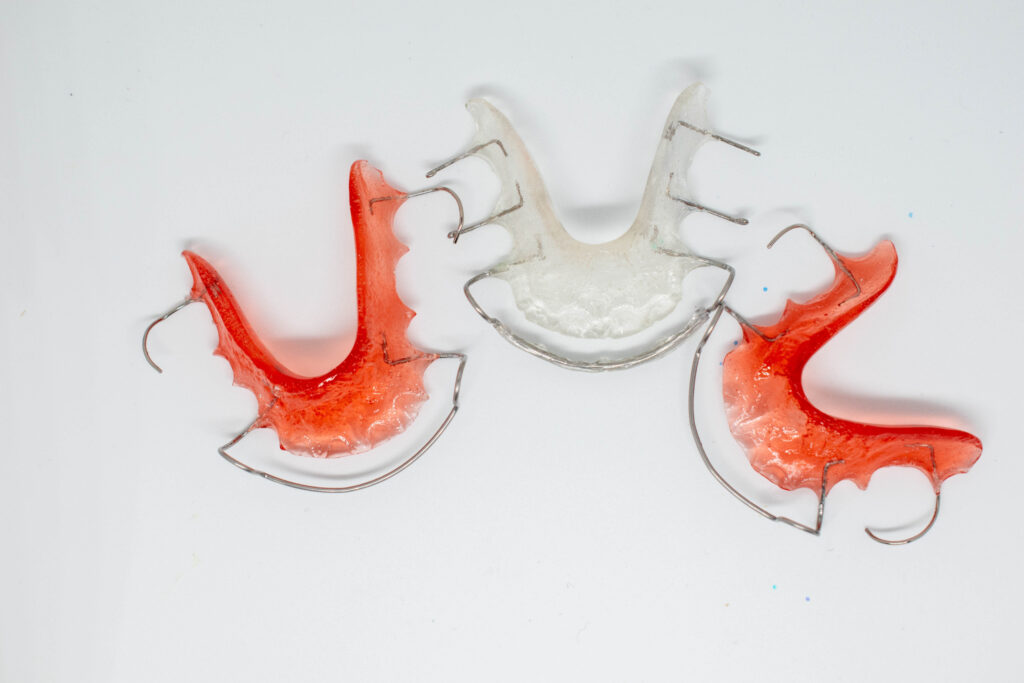
The Hawley is the classic removable design. It combines a molded acrylic plate that rests against the roof of your mouth (or along the tongue side of the lower arch) with a bendable metal wire that wraps across the front of your teeth. Because the wire is adjustable, your orthodontist can make small tweaks over time.
What Is an Essix (Clear Plastic) Retainer?
An Essix retainer is a clear, thin plastic tray that fits snugly over all of your teeth, much like an Invisalign aligner. It’s nearly invisible when worn and feels low-profile.
What Makes a Vivera Retainer Different?
Vivera retainers are made by the same company that makes Invisalign. They use a multi-layer clear material that’s built to be more durable than a standard Essix, and you usually receive several sets at once.
What Is the Typical Wear Schedule?
- Full-time wear (around 20 to 22 hours a day) for the first 4 to 9 months
- Nighttime-only wear long-term, often indefinitely
- Permanent retainers work continuously from day one
Each design works by physically blocking teeth from shifting, either by holding them from the inside with a bonded wire or by hugging them from above with a tray or wire framework.
Benefits of Each Retainer Type
Every retainer has strengths and trade-offs. Here’s what to weigh as you think through daily life with your new appliance.
What Are the Pros of a Permanent (Bonded) Retainer?
- No compliance needed, it works even if you forget
- Completely invisible from the front
- Continuous, 24/7 protection against relapse
- Very little daily effort required
- Great for anyone prone to losing things
- Nothing to take in and out before meals or brushing
What Are the Cons of a Permanent Retainer?
- Flossing takes extra steps (floss threaders or a water flosser help)
- Plaque and tartar can build up if cleaning gets sloppy
- The bonded wire can break with hard or crunchy foods
- Requires occasional check-ins to confirm the bond is solid
- Not easily removed if you ever want a break from it
What Are the Pros of a Removable Retainer?
- Easy to pop out for cleaning
- Simple to brush and floss your teeth normally
- Comfortable for most patients after a short adjustment
- Hawley designs can be adjusted by your orthodontist
- Clear options look nearly invisible
- Lets you inspect your teeth and gums easily
What Are the Cons of a Removable Retainer?
- Easy to misplace (napkins and lunch trays are famous culprits)
- Requires real discipline to wear every night
- Can warp if left in a hot car or washed with hot water
- Needs a protective case anytime it’s out of your mouth
- Pets love chewing them, so store them safely at home
What Lifestyle Factors Should You Consider?
- Athletes: A bonded lower retainer plus a removable upper often pairs well with mouthguards
- Frequent travelers: Permanent retainers mean one less thing to pack
- Tongue thrusters: Hawley designs can include features to help manage tongue habits
- Oral hygiene: If brushing and flossing are already a struggle, a removable option may be the healthier pick
- Busy parents and students: Fewer daily steps may make a bonded option more realistic
Permanent vs Removable Retainers: Side-by-Side Comparison
Here’s a quick, scannable look at how the main retainer types stack up.
| Feature | Permanent (Bonded) | Hawley | Essix / Vivera |
|---|---|---|---|
| Typical lifespan | 10-20 years | 5-10 years | 1-3 years |
| Visibility | Invisible (behind teeth) | Wire visible on front | Nearly invisible |
| Cleaning difficulty | Harder (needs floss threader) | Easy | Easy |
| Comfort | Barely noticeable | Bulkier feel at first | Low-profile |
| Compliance required | None | Nightly wear | Nightly wear |
| Risk of loss | None | Moderate | Moderate to high |
What Are the Best Use Cases for Each Type?
- Bonded retainers are often placed on the lower front teeth, which have the strongest tendency to crowd again
- Removable retainers are frequently used on the upper arch for flexibility
- Many Smiles to Love patients end up with a hybrid setup: a bonded wire on the bottom and a clear tray on top
That combo gives you continuous protection where relapse risk is highest, plus easy cleaning and flexibility up top. Dr. Schweiss and Dr. Jusseaume will walk through which approach fits your bite and lifestyle best.
Retainer Cost and Replacement Factors
Replacement costs vary by retainer type. Clear Essix trays usually sit at the lower end, Hawley designs fall in the middle and bonded wires or premium Vivera sets run toward the higher end. Your final investment depends on whether you need one arch or both, the material chosen and the brand.
Several factors affect what you’ll invest in a replacement:
- Single arch vs. both upper and lower
- Material type (standard acrylic, Essix plastic or premium multi-layer Vivera)
- Brand and lab used
- Whether rebonding or a brand-new appliance is needed
Good news: your first retainers are planned as part of finishing treatment, so ask our team what your plan covers before your braces or Invisalign come off.
What Are the Signs It’s Time for a Replacement?
- Visible cracks or chips in a clear tray
- Warping or a tray that no longer snaps into place
- A Hawley wire that’s bent or no longer touches your teeth evenly
- A bonded wire that feels loose, pokes or has pulled away from a tooth
- Teeth that feel like they’re starting to shift
HSA and FSA accounts often cover retainer replacements, and some dental plans contribute as well. A free consult at Smiles to Love is a great first step to review options for your situation.
How to Choose the Right Retainer for You
The best retainer is the one that fits your bite, your habits and your lifestyle. Here’s a quick guide to help narrow things down.
When Is a Permanent Retainer the Best Choice?
- You have a high relapse risk (severe crowding or rotation before treatment)
- You know compliance with nightly wear will be tough
- You want something completely invisible
- You prefer a “set it and forget it” approach
- You are a teen or young adult who loses things often
When Is a Removable Retainer the Best Choice?
- You have gum concerns or a history of plaque buildup
- You have a nickel allergy or sensitivity to bonded metals
- You want flexibility for sports, music or professional needs
- You prefer easier flossing and oral hygiene
- You like the option to deep clean your appliance regularly
What Age Considerations Matter?
Teens often do well with a bonded lower retainer for consistency, especially during the busy school and sports years. Adults frequently prefer clear removable options for their low profile. Children finishing phase-one treatment may use a Hawley that can be adjusted as their jaw grows.
What Does a Daily Care Routine Look Like?
- Brush your retainer gently with a soft toothbrush and cool water
- Skip toothpaste on clear trays (it scratches the plastic)
- Use retainer cleaning tablets weekly for a deep clean
- Never rinse with hot water or leave it in a hot car
- Always store removable retainers in their case when they’re out
When Should You Call Your Orthodontist?
- A broken or poking bonded wire
- A cracked or warped tray
- Teeth that feel like they’re moving
- A retainer that no longer fits
- Any tooth sensitivity around the bonded wire
The final call should be made alongside your orthodontist, based on your original bite and how your teeth want to settle. Dr. Schweiss and Dr. Jusseaume, along with our entire team, will help you weigh the options with your long-term smile in mind. As specialists who completed years of additional training beyond dental school, your orthodontists bring deep expertise to this decision.
Frequently Asked Questions About Retainers
Do permanent retainers ever need to be replaced?
Yes. A bonded retainer typically lasts 10 to 20 years with good care, but the wire can break, the bonding cement can wear down or a tooth can shift slightly and change the fit. Regular check-ins let your orthodontist catch issues early and rebond or replace the wire before your teeth move.
How much does a new retainer cost?
Replacement cost depends on the type and whether you need one arch or both. Clear Essix trays sit on the lower end, Hawley designs in the middle and bonded retainers or premium Vivera sets toward the higher end. Smiles to Love can walk you through exact pricing at your visit.
Is it okay to stop wearing retainers after 2 years?
No, and this is one of the most common reasons smiles relapse. Teeth can continue to shift throughout your lifetime due to natural aging, jaw changes and daily habits like chewing and tongue pressure. Nighttime retainer wear is recommended indefinitely to keep your smile looking the way you earned it.
How often should I clean my retainer?
Rinse your removable retainer with cool water every time you take it out, and brush it gently with a soft toothbrush daily. Once a week, soak it in a retainer cleaning tablet solution for a deeper clean. For bonded retainers, floss daily using a floss threader or water flosser to keep plaque from building up around the wire.
What if I lose my retainer?
Contact your orthodontist within 48 hours. Teeth can start shifting surprisingly fast, and the longer you wait, the harder it is for a replacement retainer to fit properly. Give your orthodontist a call right away so they can get you in quickly and prevent any loss of the progress you worked so hard to achieve.
Can I switch from removable to permanent later?
Yes, with a quick consult. If your teeth are still in good alignment, your orthodontist can bond a wire behind your front teeth to add extra protection. If nightly wear isn’t sticking as a habit, or you just want a simpler routine, this switch can lock in the smile of your dreams for the long haul.